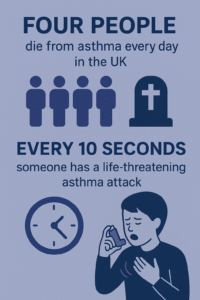
If you’re living with asthma, you know the reality: four people die from asthma every day in the UK, and every 10 seconds someone has a life threatening asthma attack. But here’s what gives us hope—groundbreaking asthma clinical trials are happening right now, and people with asthma like you are making it possible.
At 4MCS, we’ve been part of developing the first new asthma treatment in 50 years. Our approach to asthma trials isn’t just about testing asthma medicine—it’s about working with you to create a future where this lung condition doesn’t control your life.
 Understanding Your Role in Asthma Clinical Trials
You already understand what it means to be short of breath, to reach for your reliever inhaler multiple times a day, or to wake up with asthma symptoms that disrupt your sleep. When we mention that over 12,000 people in the UK have died from asthma attacks in the past ten years, you know these aren’t just statistics—they represent real families affected by this serious lung condition.
This is exactly why your participation in clinical trials matters. Recent asthma trials show remarkable progress. The ABRA trial tested a new approach to treating asthma exacerbation, finding that a single injection could be four times more effective than standard treatment. These advances only happen when people with asthma choose to participate in research.
4MCS’s Participant-Centred Approach to Asthma Trials
Finding the Right Participants
Our Ilford facility serves over 10 million people across London and Essex. We maintain a database of over 35,000 participants, including many with asthma symptoms ranging from mild to severe. When planning asthma clinical trials, we carefully match potential participants based on their medical history, current asthma control, and specific lung condition characteristics.
We understand that asthma affects people differently—from young children experiencing their first asthma attack to adults managing long-term symptoms. Our recruitment considers your entire situation, not just your asthma treatment needs.
What Makes Our Asthma Trials Different
Comprehensive Asthma Assessment: Participating in our asthma trials means receiving care that often exceeds routine NHS appointments. Our experienced respiratory specialists understand how to assess asthma control thoroughly, using tools like peak flow meter measurements and detailed symptom reviews.
Your Safety Throughout: Every asthma trial we conduct follows strict double blind placebo controlled protocols approved by the MHRA. This means neither you nor your doctor knows which treatment you’re receiving, ensuring unbiased results whilst maintaining your safety.
Your Journey Through Our Asthma Clinical Trials
Phase 1: Comprehensive Evaluation
Detailed Health Assessment: Before any asthma trials begin, we thoroughly evaluate your condition through:
- Complete medical history review focusing on your asthma symptoms and triggers
- Lung function tests measure how effectively you can push air out of your lungs
- Blood test analysis to identify biomarkers that might predict treatment response
- Review of your current asthma action plan and medications
- Assessment of your reliever inhaler technique
This comprehensive evaluation often reveals asthma management issues that can improve your day-to-day symptoms regardless of the trial asthma medicine.
Phase 2: Active Participation in Asthma Trials
Regular Monitoring: During asthma clinical trials, you’ll receive detailed monitoring including:
- Frequent asthma symptom assessments to track your daily breathing
- Lung function measurements using advanced equipment
- Blood test monitoring to ensure treatment safety
- Review of any asthma exacerbation episodes
- Ongoing asthma control evaluation
Emergency Care Access: All participants have 24/7 access to our medical team. If you experience a severe asthma attack or concerning symptoms, immediate expert care is available.
Phase 3: Contributing to Breakthrough Treatments
Recent asthma trials have shown extraordinary promise. Ultra-long-acting biologics like depemokimab demonstrate up to 54% reduction in severe asthma attacks with just two injections yearly. These advances represent hope for millions of people with asthma, but they only happen through rigorous clinical trials participation.
Why Join 4MCS Asthma Trials?
Benefits for People with Asthma
Expert Asthma Treatment: Access to respiratory specialists with over 130 years combined experience in asthma clinical trials and lung condition management.
Enhanced Monitoring: More comprehensive asthma control assessments than typically available through routine care, including advanced peak flow meter monitoring and detailed symptom tracking.
Early Access: Potential access to innovative asthma medicine months before NHS availability.
Compensation: Reasonable reimbursement for your time and travel expenses.
Long Term Impact: Contributing to asthma treatment advances that could help millions of people with asthma worldwide.
Your Safety and Rights
All our asthma trials maintain full MHRA approval with comprehensive insurance coverage. You continue your regular asthma treatment throughout the study, and any trial asthma medicine is additional to your current care.
Most importantly, you maintain complete control. You can withdraw from asthma clinical trials at any time without affecting your future NHS care or your relationship with your GP.
Current Focus Areas in Our Asthma Trials
Personalised Asthma Treatment: Using blood test results to match people with asthma to the most effective treatments for their specific lung condition.
Emergency Care Innovation: Developing better responses to life threatening asthma attacks that reduce the need for repeated hospital visits.
Long Term Symptom Control: Testing asthma medicine that provides better asthma control with fewer side effects than current treatments.
Paediatric Research: Specific asthma trials designed for young children, recognising that asthma symptoms and treatment needs differ across age groups.
Getting Involved in Asthma Clinical Trials
If you have asthma symptoms and are interested in contributing to medical advances, here’s how to proceed:
Initial Discussion: Contact us to learn about current asthma trials without obligation. We’ll answer questions about clinical trials participation and explain what involvement means.
Screening Assessment: If interested, we’ll arrange a comprehensive evaluation including lung function testing, blood test analysis, and review of your asthma action plan.
Your Decision: Throughout the process, you maintain complete control over your participation in our asthma clinical trials.
Frequently Asked Questions About Asthma Trials
“Will participating affect my current asthma treatment?” No. You continue your regular asthma medicine and reliever inhaler use throughout the study. Trial treatments are addition to your current care.
“What if I have a severe asthma attack during the trial?” We provide 24/7 emergency care access. Our team is experienced in managing life-threatening asthma episodes and will coordinate with your existing healthcare providers.
“How do you ensure asthma trials are safe?” All our asthma clinical trials use double blind placebo controlled methodology with independent safety monitoring. Regular blood test monitoring and lung function assessments ensure participant safety throughout.
Your Role in Tomorrow’s Asthma Treatment
Every major advance in asthma treatment—from the reliever inhaler you use today to the emergency care protocols that save lives—came from clinical trials involving people willing to participate in research.
At 4MCS, we’re committed to conducting asthma trials that lead to real improvements for people with asthma. Whether you’re struggling with poor asthma control, concerned about long term medication effects, or simply interested in contributing to medical advances, there might be asthma clinical trials suitable for you.
Your participation helps us move from concept to completion in developing tomorrow’s asthma treatment solutions.
For comprehensive information about asthma management and current NHS guidelines, visit the NHS asthma information page, which provides detailed guidance for patients and healthcare professionals.