When you receive treatment from the NHS, you benefit from decades of clinical research. Every medicine you take, every procedure you undergo, and every guideline your doctor follows has been shaped by careful medical research designed to find the best ways to help patients like you.
But what exactly is clinical research, and how does it make a real difference to patient care? Let’s explore this vital connection.
 What Is Clinical Research?
Clinical research is the organised study of health and illness that involves people. It includes clinical trials that test new treatments, but it’s much broader than that. A clinical study might look at how different treatments work in real-world settings, which patients respond best to specific therapies, and how healthcare systems can deliver better care.
Medical research includes different types of studies. Some research involves healthy participants who help us understand how the body works. Other studies compare a new treatment with a standard treatment to see which works better. These treatment groups help researchers understand what improves patient outcomes.
Evidence-based medicine is the foundation of NHS healthcare. Clinical research adds to this knowledge and helps doctors decide how best to treat illnesses. Without this health research, doctors would still be making treatment decisions based on guesswork rather than solid evidence.
The Direct Impact on Your Care
Better Treatments Come from Medical Research
Every effective treatment started as a research question. Take asthma inhalers, for example. The development of these life-saving medical devices came from researchers studying how to deliver medicine directly to the lungs. Today’s patients with asthma have a much better quality of life because of this health research.
Each clinical study that involves patients helps us understand what works best. When participants in a clinical trial test new treatments, they help create better options for future patients. This medical research leads to improved patient outcomes for everyone.
If you’re interested in how you could contribute to medical advances, you can explore our current clinical trials to see what studies are currently recruiting participants.
Research-Active Hospitals Provide Better Care
Here’s something remarkable: hospitals that conduct clinical research have lower death rates, with benefits for all patients, not just those in trials. This means that even if you never take part in a clinical study yourself, you benefit from being treated at a hospital that conducts medical research.
Why does this happen? Research-active hospitals tend to stay up to date with the latest treatments, have staff who know about cutting-edge medicine, maintain higher standards of care, and question and improve their practices regularly.
Making Healthcare More Personal
Modern clinical research helps doctors understand which treatments work best for different types of patients. Instead of a one-size-fits-all approach, health research is revealing how factors like your age, genetics, and other health conditions affect which treatment will work best for you.
When a research study includes data about different patient groups, it helps doctors give you more personalised care. Each clinical trial that involves different types of people helps us understand how to improve the quality of care for everyone.
How Research Transforms Healthcare Systems
Improving NHS Efficiency
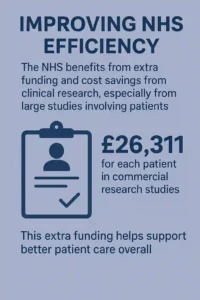
The NHS benefits from extra funding and cost savings from clinical research, especially from large studies involving patients. In 2022-2023, NHS trusts received an average of £26,311 for each patient in commercial research studies. This extra funding helps support better patient care overall.
Bringing Research Closer to Patients
This means research happens in the right places, including GP practices and community clinics. You might have access to cutting-edge treatments at your local surgery, not just at major hospitals. This approach involving patients in their usual care settings makes research more accessible.
Each clinical trial requires careful planning to make sure it works for patients. When a research study includes people from different communities, it helps us understand how treatments work for everyone.
Faster Access to New Treatments
The UK government is working to speed up medical research by improving staff training, resources and buildings. This means new treatments reach patients faster than before.
The regulatory authority (like the MHRA in the UK, similar to the FDA in America) makes sure all new treatments are safe before doctors can use them. This process helps improve the quality of care whilst keeping patients safe.
The Research Process: From Lab to Your Bedside
Understanding how medical research becomes better patient care helps explain why this work is so important.
First, scientists study diseases and possible treatments in the lab. Then, promising treatments are tested for safety before any clinical study involves people. Next, new treatments are tested in carefully planned clinical trials. Each trial requires both a control group (who get standard treatment) and a treatment group (who get the new treatment). After this, researchers study how treatments work in everyday NHS care. The data included in studies helps us understand what works best. Finally, successful treatments become part of normal care.
Each clinical study that involves people helps build the evidence doctors need. When healthy participants and patients take part in medical research, they help create better treatments for everyone.
Challenges and Opportunities
Current Challenges
Clinical research faces some big problems. Before COVID, the UK dropped in world rankings for big clinical trials (from 4th place in 2017 to 10th in 2021).
Studies that involve many different types of people help us understand treatments better. But some groups are still missing from health research. We need more studies involving participants from all backgrounds.
The Path Forward
The UK is spending heavily to fix these problems. The National Institute for Health and Care Research receives £1.6 billion each year from the government.
This money helps involve patients in research studies. It also helps train staff and build better facilities for clinical research.
What This Means for You
Whether you realise it or not, clinical research affects almost every aspect of your healthcare. Research has led to vaccines that prevent serious diseases, better testing methods that help doctors catch diseases earlier, more effective medicines with fewer side effects, improvements in how healthcare is delivered, and studies that help make treatment more comfortable and convenient.
The Bigger Picture
Making research a natural part of clinical care means that patients and service users can expect to have access to the most cutting-edge treatments and technologies. When research becomes a normal part of healthcare, everyone benefits.
The goal is simple: to create a healthcare system where every patient receives the best possible care based on the strongest available evidence. Clinical research is the bridge that connects scientific discovery to the treatment you receive.
Join Us in Advancing Medical Research
At 4MCS, we’re proud to be part of this vital research ecosystem, helping to bring new treatments to patients across the UK. With over 130 years of combined experience in clinical trials, we continue to contribute to the advancement of medical knowledge that benefits patients everywhere.
If you’d like to become a clinical trial participant and help shape the future of medicine, view our current clinical trials to find a study that might be right for you.